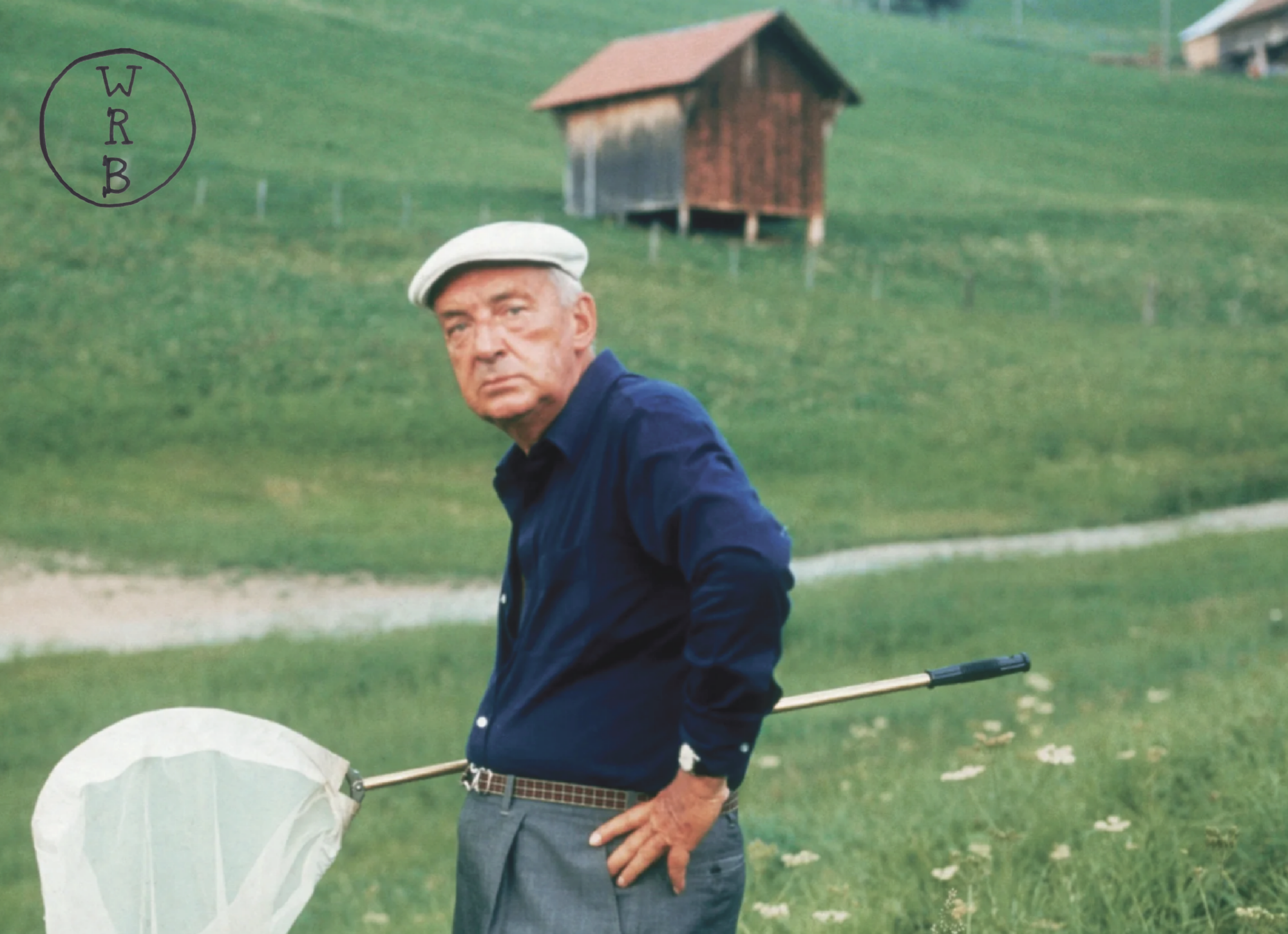
Vladimir Nabokov’s essay “Good Readers and Good Writers” formed the foundation of his literature classes taught at Cornell in the 1940s and 50s. In the essay, Nabokov argues that certain traits distinguish “good” readers from “bad” readers. A “good” reader, according to Nabokov, rereads books, has a robust imagination, and separates the fictional worlds in novels from the real world. Conversely, “bad” readers try to relate to the text; they try to glean historical facts from novels that Nabokov postulates are meant to be read as “fairy tales.”1 Merve Emre, the Shapiro-Silverberg Professor and Director of Creative Writing and Criticism at Wesleyan University, explores Nabokov’s claims in her essay “Good Reader, Bad Reader,” and nestled in an old debate of “good” vs. “bad” readers, BookTok explores the nuances of the two labels in a dying age of reading. Readers flock to TikTok in search of their next favorite book, and while we should commend those who are still choosing to read, there is a bigger problem to address when observing this phenomenon. In the age of BookTok, bad readers are easily produced and controlled by curated media. Publishers and BookTok creators subtly coerce the general masses to engage with an art that is slowly dying, yet to quietly dictate what society is reading. Bad readers are drawn into the realm of aesthetics, consumerism, and performative reading. Good readers are being reduced to a thing of the past.
Today, readers are being shaped primarily through online reading culture. BookTokers are constantly advertising their most recent haul from Barnes and Noble, and publishers reach out to creators to promote their upcoming books, paying them to discuss early copies of unreleased books. With this incentive, it is no surprise that we are bombarded with an oversaturation of books that represent the same genres over and over. These genres, from romantasy, to enemies to lovers, are creating a certain uniformity within readers, converting what once have been the unique tastes of individuals into copy-and-paste versions of one another, and allow for the same types of books to circulate through BookTok and the physical world.
Publishers and BookTok creators play a large role in curating the tastes of good and bad readers alike. The publishing industry has not withstood the pressures of capitalism and commodification, despite literature being largely understood as a non-economic entity. Exploiting readers to purely consume one type of book ensures money will be earned at the expense of the intellectual capacities of readers. By churning out easily digestible novels to an audience that is at a constant war with shortened attention spans, publishers are able to discretely control the types of books that are on the market today, as well as pertain to a limited view of what reading is and should be. Bad readers have been, and are still being, shaped by institutions that profit off of their mindless consumption of books. The absurdity of mechanical reading is a paradox to the notions of what Nabokov argued. He believed that there should be harmony between author and reader, and “we ought to remain a little aloof and take pleasure in this aloofness while at the same time we keenly enjoy—passionately enjoy, enjoy with tears and shivers—the inner weave of a given masterpiece.”2
The same type of books have been circulating BookTok for years, even if the cover is different. Commercialized characters found in popular BookTok novels allow for readers to be engaged with an art that is slowly disappearing. One might argue that it doesn’t matter if someone is a “good” or “bad” reader, so long as they are actually reading. BookTok’s favorite authors–Colleen Hoover, Emily Henry, Sarah J. Maas–paint their female protagonists with enough privilege to mirror the reader’s own depths of self-pity and yearning while still offering enough distance for the reader to distinguish themselves from the fictional troubles of the story. Today, the success of the book lies within the author’s ability to create a blank-slate character that can appeal en-mass. Without the fascination of an agreeable character, how can the reader relate to the story? Nabokov states “This is the worst thing a reader can do, he identifies himself with a character in the book. This lowly variety is not the kind of imagination I would like readers to use.”3
Nabokov rejects the idea of a reader finding comfort in the characters of a book. He dissuades readers from connecting emotionally with novels; when one does so, all regard for the technical elements and stylistic choices of the author goes unnoticed in favor of personal validation. The good reader doesn’t take this shortcut; the good reader takes the words the artist has given them and studies them for their aesthetic logic.
The process of selling books has overtaken the art of literary writing that novels attempt to tackle: connecting distinct people, spaces, and times to share consciousness over different periods. Novels today attempt to cheaply sell storylines to readers, marketing their characters as two-dimensional beings for the audience to relate to in whole. This, in part, is a key factor in how BookTok is redefining the term of being a reader, and how the entity operates as a strictly transactional mode of placing money in the hands of mass industries.
Critical to understanding the concept of bad reading in the 21st century is the performative mode of reading that is supported by BookTok. The internet’s use of the word aesthetic has taken off over the years, and is used as an adjective to generalize something that has a certain vibe, separate from the traditional use of the word that relates to individualized and personal tastes concerning the nature of art. The internet uses the word “aesthetic” in a grammatically incorrect way that is now shaping the entire genre of reading. Some classify themselves as fans of the dark academia feels of a Donna Tartt novel, others are enraptured by the thrill of a good enemies-to-lovers trope. Regardless, when discussing the dichotomy of good and bad readers, it is necessary to point to the acts of categorizing such readers in alignment with their aesthetic priorities concerning reading.
To summarize Nabokov’s criterion between the two, “good” readers have an imagination that they routinely cultivate through the novels they read, and a deeply critical understanding of the book they are reading, whereas “bad” readers focus on surface-level and personal consumption of books.4 According to Emre, bad readers matter as “they lead us to the kinds of citizens that practices of bad reading aspired to produce,”5 and emerging from publishers’ use of power, BookTok functions as a means to control and selectively feed users media that pertains to a certain appearance-based status. This is far from the realm of what Nabokov would consider a “good” reader. The rise of internet “aesthetics” contributes to a limiting practice of how we approach reading, paying less attention to qualities of close reading and intellectual understanding. There is no depth to the use of the word “aesthetic” in this context, and how many are differentiating between novels. It is a purely theatrical act that prioritizes superficial status over cultivated taste. That’s not to say that readers can’t have preference for one genre of book; rather, they shouldn’t limit themselves to consuming media that they “just think is aesthetic.” When this happens an important question is raised: is the self-proclaimed reader actually enjoying The Bell Jar, or do they like to be seen as the kind of person who reads it?
The hierarchies of readers in the BookTok world are more than enough to be concerned with this topic. The act of reading is shifting from actually enjoying reading to how one appears to be perceived while reading. A certified bookworm “stands out” from the crowd, but also blends in more than ever by solely consuming the same kind of book over and over. Many readers have become insatiable creatures. Algorithmic media trains young readers to only look for a certain type of book, a book that can cater to the narcissistic tendencies of many in today’s age. Many of those bookworms chase the “academia aesthetic.” However, the problem with constantly using labels to define an art form contradicts the very notion of what art is: a means to explore and push the boundaries of prescribed ideals. When readers of today get sucked into focusing solely on how they look while reading, a new strain of bad readers are born, “those who begin [reading] with a readymade generalization, [beginning] at the wrong end and [traveling] away from the book before one has started to understand it.”6
“In order to bask in that magic a wise reader reads the book of genius not with his heart, not so much with his brain, but with his spine.”7
Following Nabokov’s ideas is a choice that each reader must make for themselves. Not all of his suggestions should be taken blindly; however, the advice that he offers can help guide readers towards making more thoughtful choices while engrossed in their next novel. His instructions on how to be a “good” reader are more important now, in the senseless world of BookTok reading, than ever before, and can be studied to create a more empathetic and attentive society. Nabokov’s message can reignite not only the act of reading with one’s spine, but by reading with one’s body and soul, the very tool that can and should be used to combat the skewed priorities of readers today.
Footnotes
- Vladimir Nabokov, “Good Readers and Good Writers” (Moody AP PBworks, PDF), accessed July 23, 2026 https://moodyap.pbworks.com/f/nbkv.GoodReaders_Writers.pdf. ↩︎
- Nabokov, “Good Readers and Good Writers,” 3. ↩︎
- Nabokov, “Good Readers and Good Writers,” 3. ↩︎
- Nabokov, “Good Readers and Good Writers,” 1. ↩︎
- Merve Emre, “Good Reader, Bad Reader,” Boston Review, November 27, 2017, https://www.bostonreview.net/articles/merve-emre-good-reader-bad-reader ↩︎
- Nabokov, “Good Readers and Good Writers,” 1. ↩︎
- Nabokov, “Good Readers and Good Writers,” 6. ↩︎
