
The springtime production of Coppelia is nimble fun, unlike the maudlin love stories that seduce crowds. New York City Ballet (NYCB) presents pink pastoral sets against a frothy score. Still, the register of its serious history is accessible. More than lacy play, Coppelia is historically enriched, put on during a spring where the company paradigm is shifting. Beloved principal Megan Fairchild’s retirement nights before, and a season bloated by mundane programming, makes the show a moment of comic relief. Against the mountainous Galician region of the Austro-Hungarian Empire, a life-sized doll is resigned to her clock tower and her creator, Dr. Coppelius (Harrison Coll). With a rigid kiss blown to the townspeople below, Coppelia blankly seduces Franz (Chun Wai Chan). Swanilda (Tiler Peck), heart aching over Franz’s paramour, is the heroine that defies normative ballet logic. Unlike the lead women of the previous romantics—like Giselle of Giselle (1841) or the Sylph of La Sylphide (1832)—the 1870 genesis of Swanilda produced a heartbroken lead that proceeded with banter, constructing the ballet’s thematic feelings: responsive, active, and mischievous.
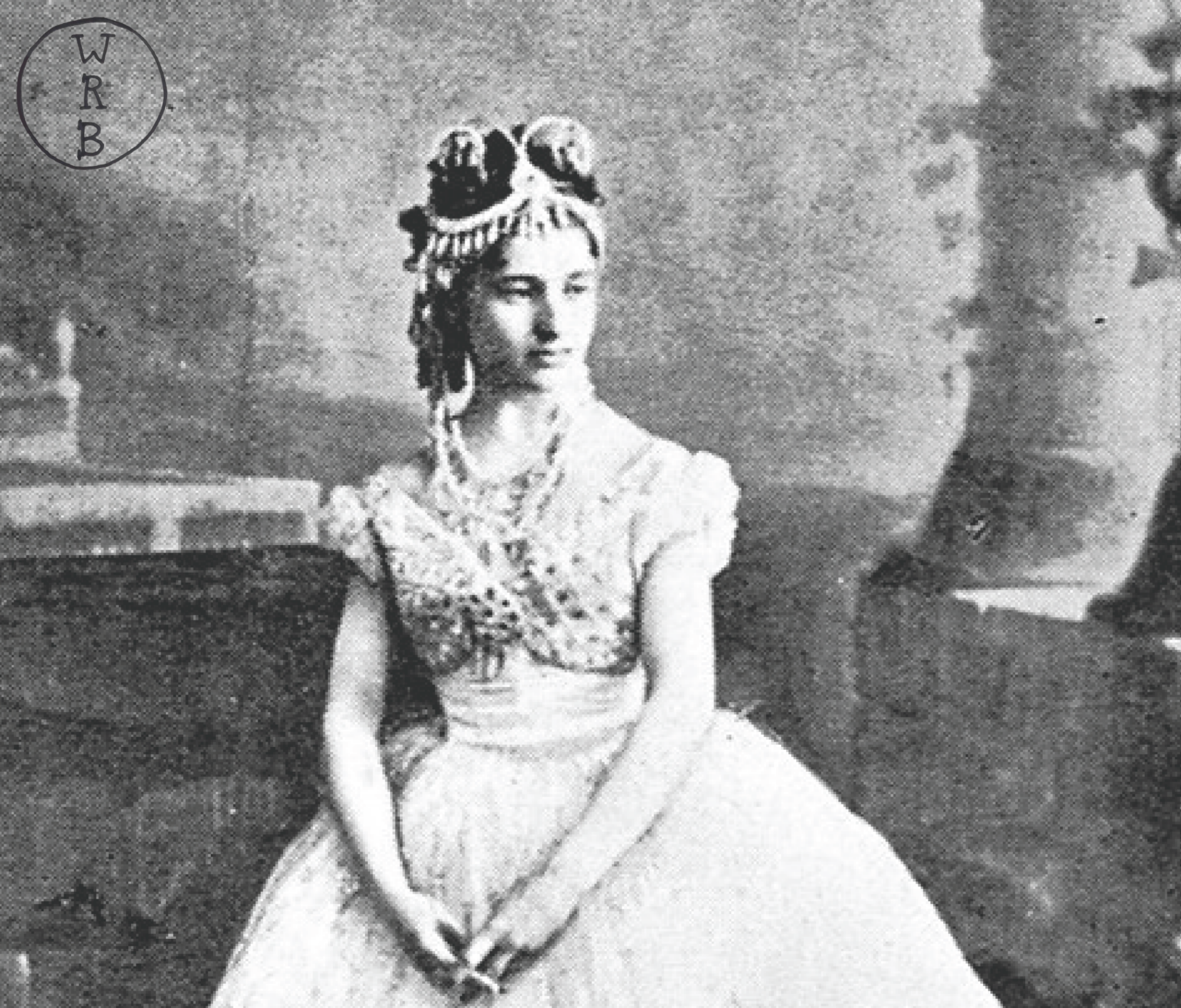
The modern edit by George Balanchine and Alexandra Danilova honored the synergizing of Eastern and Central European folk dance with classical variations. Coppelia’s choreographer, Arthur Saint-Leon, had mostly choreographed for the female dancer. Accordingly, Balanchine’s interpolation focused on more male variations. These new variations held their own, but were overshadowed by the women’s movement coined by Saint-Leon in 1870. Saint-Leon, ballet master of the Imperial Ballet in St. Petersburg, discovered Giusepinna Bozzacchi while she was dancing with the Paris Opera ballet. She was young yet so distinguished that he insisted she perform Swanilda. She danced the role eighteen times. As was happening with many female performers, the Theatre Imperial de l’Opera stopped paying Bozzacchi, and her body was compromised by malnutrition. That summer, as the Franco-Prussian War erupted in Europe, she contracted smallpox and died on the morning of her seventeenth birthday. Swanilda—brave and roguish—maintains a posthumous power for her creator.
Refracted in the underbelly of the perched glasses of the viewer ahead of me, decadent figures queue against a watercolor set. Coppelia sits rigid on her balcony. At the late edge of the 19th century, fears of automation accelerated, alongside industrialization. Coppelia’s character, mostly plainly funny, was an uncanny character in a mechanizing Europe. Coppelia, still, is a strange sight; she is completely without vigor while, below her gaze, townspeople angularly jaunt a Polish mazurka. White heels, men in pleated skirts, textural bodices, and geometric headpieces lend to an authentic folk feeling. Swanilda and a mass of younger dancers join in sautes that fill the stage. They giggle and whisper. The synchronization of the corps is near-perfect, almost mechanical, but invigorated; truly mechanical is the doll that watches. Uncanny and rigid, Franz falls for her. But she is a docile machine, not a seductress, and the woman who loves him moves with vitalized drama and verve just beyond his sight.
I spent intermission surveilling the patrons of NYCB, feeling an uncanny excitement from the ballet. The adjacent couple holding opera glasses spent the break scrolling Instagram, surveying an algorithm of real estate, girls in bikinis, and gardening. An older man ranted about spraying Coppelia with WD-40 and a young girl put her hand on her chest and stared at the golden, latticed ceiling. At resumption, Peck entered in an extending rectangle of orange light. The house laughed as a row of hesitant girls followed and the group drummed up their acting, knees quaking skillfully. They sneak into Dr. Coppelius’ tower and the narrative is lucid and slow. Both the vivid action and cerebral dimension return to the ballet in Act II; Dr. Coppelius returns home to a drunken invasion and maddeningly tries to breathe life into his doll. The score swells. Having “life” infused into her, Swanilda manufactures an exacted physical hysteria that bridges doll and girl. Believing his creation has been truly animated, Dr. Coppelius holds a mirror to Coppelia’s face. In a long promenade, she stares at her contour. Coppelia is a stage for Peck’s dance judgment to come through. Her distinction in movement between Swanilda and Coppelia is witty and technically imposing. In the third act, her turns as Swanilda flare, dart, and invoke a gratitude that she is human again. Bozzacchi’s character was a daring construction following a period of ballets like La Sylphide, where similarly agentic and spirited women faced more fatal fates than Swanilda. Although parts of the third act meander, the joyful Hungarian Czardas showcases the compounded brilliance of the ballet.
Some time later, sitting on a bench in Central Park, I spotted a woman with an expertly pinned bun. I asked her if she was a dancer and she quickly sat down next to me. Growing up in Russia, she had been classically trained in Vaganova technique. I told her about my time viewing Coppelia, and she smiled and looked out on the park, at some faraway history with the comedy. As a teacher of character dance—the stylized folk dances—she understood my excitement. I explained that watching Swanilda zoom around during the closing Czardas felt like a rectification for all the women dying at the hands of romantic tragedies. Coppelia put an end to the Romantic Ballet with its ideological, visual, and comedic weight. She was older, with a lithe figure. Her career was coming to an end, and she told me that she did not love anything like she loved ballet. She began to cry. I came close to comforting her, but I let the understanding pass in silence. I thought it better to sit beside her, discussing character dance, Swanilda, and her victories.
