When I remember the existential threats of war, disease, and climate change, I buy a bunch of records. I imagine the internet a thing of the past, WiFi long gone, Spotify an old dream. Holding the record in my hands provides a sense of certainty. If the whole internet crashes, I can still listen to When I Get Home and Bon Iver, Bon Iver with a candle lit.
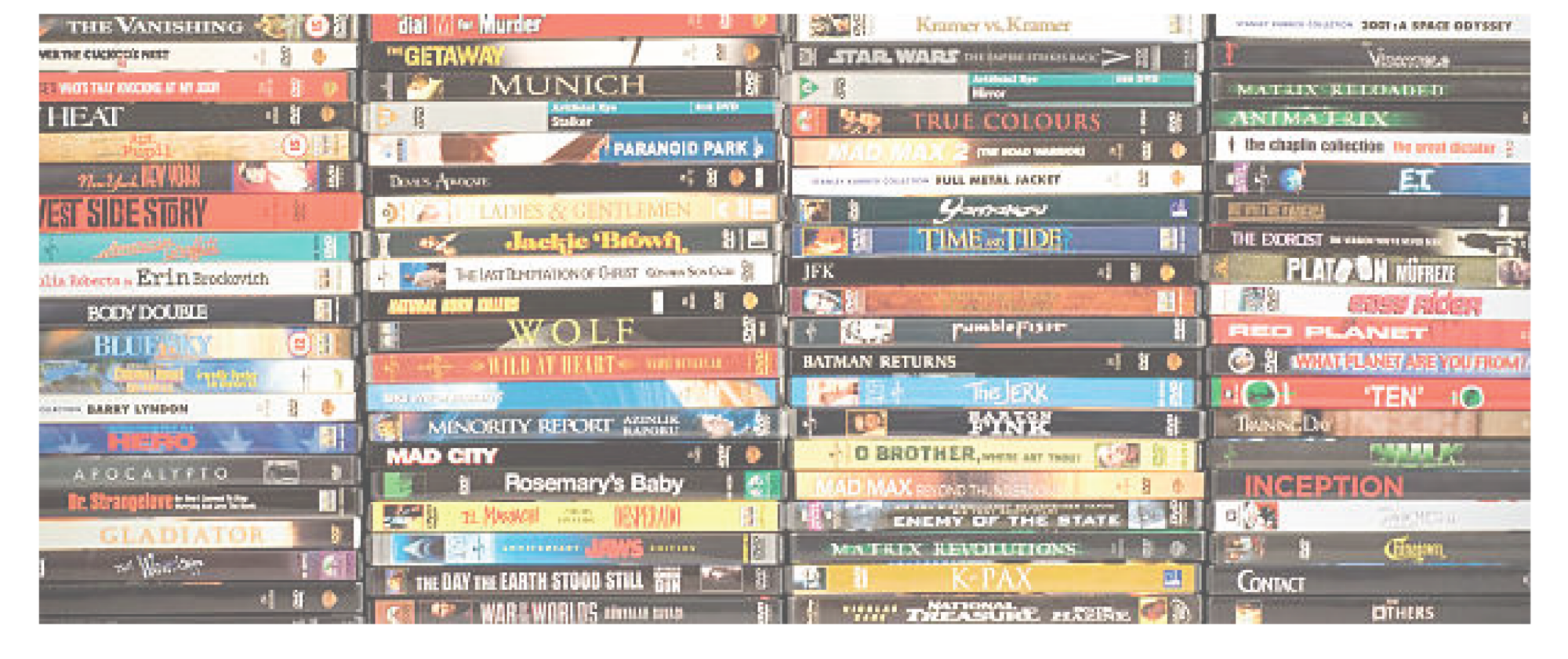
Physical media is, in some cultural circles, having a resurgence. One in four Wesleyan students probably has a record collection, if not stacks of CDs, DVDs, or cassettes. Twitter loves the Criterion Closet, which houses the Criterion channel’s “important classic and contemporary films from around the world.” I have a few DVDs despite not having a DVD player — Blade Runner, When Harry Met Sally, The Shining, and a few Harry Potters — again, for the end times. My TikTok keeps pushing those iPods that aren’t iPods, and all my friends want to get their photos printed at CVS. Although the dividing lines between Millennials, Gen Z, and Gen Alpha are debated, those of us born in the late ’90s and early 2000s are the last generation to know a world before iPhones. I grew up watching Pixar DVDs and listening to Kanye West’s “Heartless” on my brother’s iPod. I have some baby pictures on my phone, but the originals are stashed away in family photo albums. My brother and I used to play Pac-Man on my mother’s BlackBerry, and I remember the day my father traded in his beloved Motorola.
But I also watched Eloise on Netflix when its interface looked like an IMDb page. As nostalgic as I am for the analog childhood I had, I also feel nostalgia for the early internet, when YouTube was the video platform. Now, however, the internet is a business model, and every click has a price. My friends laugh because I use Firefox and DuckDuckGo, but Google drips AI, and my VPN says my information was sold on “the dark web.” In an age of streaming and historic unemployment, the new adults are reconsidering their options. Pay a monthly rate for whatever slop Netflix is offering, or own my favorite TV show on DVD? Rely on my father paying for my Spotify Premium plan forever, or own Ego Death at a Bachelorette Party on vinyl?
However, even the analog vinyl is still tainted by the digital age; most vinyls come with codes for digital downloads. I bought every single Bon Iver record, but distributors know I still want the option to listen digitally. Some artists are exploring a digital music landscape outside of streaming. Instead of inviting fans to presave Ego Death and focusing on streaming numbers, Hayley Williams gave fans a free link to 17 MP3 files. All you needed was a code, which was dutifully passed around the internet. Before I had the vinyl, I had the songs; I’d ripped them from her website like she wanted me to.
Hayley Williams isn’t the only mainstream artist advocating for “piracy” right now. In early April, Charli xcx created a second Instagram account, @b.sides, to tease an upcoming album rollout. After releasing the controversial lead single “Rock Music,” she posted a separate song to @b.sides. The caption declares this her first B-side and invites fans to “rip the audio if you want it xx.” The B-sides are not currently slated for a formal digital release, but her comments are flooded with glowing reviews: “this belongs on the album,” “these b sides are so much better than what you’re posting on main charlotte.”
Charli offered these tracks up on a silver platter. They can be yours forever, free of charge. But audiences crave the ease of streaming. A good product works; a great product feels easy to use. Charli xcx’s fans want her unreleased songs on streaming because it’s easier for them. I ripped her B-sides and barely listened to them due to the inconvenience. Companies know this – it’s why, even though I set up my Spotify to let me stream my local files, it won’t work on my phone. iTunes treats legal and illegal files equally. Spotify knows better. I have Ego Death on my computer and on vinyl, but I mostly listen on Spotify. When I want to listen to my ripped B-side “Playboy Bunny,” I have to go to Files and redownload the MP3. It does not automatically loop, and it interrupts Spotify, which I then must reopen and replay. Despite these songs being free and, in a way, more accessible than a paid subscription, they do not feel easy to listen to. It feels like work.
Art is impermanent and often kept behind a paywall. Unless you work at the Louvre, there’s a slim chance you’ll get to see the original Mona Lisa every day. And some could argue that restoration efforts mean the original exists in an age inaccessible to us. Regardless of the photos online and endless reprints, the public doesn’t own the Mona Lisa. But most adults remember owning their own music and movies, whether it be on vinyl, iTunes, DVDs, or VHS tapes. Streaming services replaced these mediums without keeping the promise of ownership. Streaming is unstable. I’ve watched my favorite movies and shows on Netflix and HBO Max, only to find they’ve disappeared a month later. I bought a movie on Amazon for $20, and a year later, the contract expired, taking my money and supposed ownership with it. HBO Max has come under fire for removing animated shows hosted solely on its platform, some of which are originals, making them inaccessible. Unless someone pirated them.
Movies and television shows that disappear from streaming can remain free and accessible when pirated. Websites hosting pirated media are inherently anticapitalist. The content is taken and redistributed, offering a free alternative for those who can’t or won’t pay, routing money away from industry bigwigs. The pirates have done the work, and you can reap the benefits.
The most dangerous part of frequenting such sites is clicking the wrong link and getting hacked. A 2021 article from the Digital Citizens Alliance, a nonprofit group “whose mission is to raise awareness among the public and policymakers about how to make the Internet safer,” quotes the executive director. He defines online piracy as a “multi-billion dollar industry that baits consumers to expose them to fraud and malware.” It is true that using piracy sites triples a user’s chances of being exposed to malware, and the pirates behind these sites and apps “are reaping an estimated $1.34 billion in annual revenues” from advertising (most of which, in my experience, is pornographic). The DCA says, “The sheer size of the piracy ecosystem should be troubling for policymakers, the advertising industry, and those dedicated to consumer protection.” Most of the report focuses on this second camp, “the advertising industry,” and the money pirates take from them. The report mentions “Amazon, Facebook, and Google” as the companies most commonly advertised by pirates, meaning they reap some benefit from the $1.34 billion in ad revenue. So Jeff Bezos and Mark Zuckerberg are okay with piracy – not to mention that their websites steal and sell my data via non-essential cookies – and they keep making money, even when those troubled policymakers take them to court, despite pirates being their “competition.” I return, then, to “the advertising industry,” and I must report — I’m not concerned about its future.
The bigger concern regarding piracy is supporting artists directly. In April, a much-anticipated follow-up film to Avatar: The Last Airbender leaked online. While many fans flocked to piracy sites, others protested, wanting to wait until its slated release so the artists could earn their rightful pay. Pirating books has a similar consequence — authors earn money based on sales or library check-outs, and when you’re illegally downloading their book, you’re failing to put money in their pockets. These sales make a big difference if you’re not J.K. Rowling; most authors aren’t. Artists, like those behind Avatar: Aang, find widespread piracy “incredibly disrespectful.” Hayley Williams and Charli xcx, however, are inviting fans to rip their music. And maybe this is because most streaming services pay musicians less than (or just about) one cent per stream. Revenue comes from record and CD sales – from holding the vinyl in your hands – and from touring. Ticket and merchandise prices are extremely high and only getting higher, and it’s how artists stay afloat. If you really want to support your favorite artists, streaming may not be the way to do it.
Despite physical media’s supposed comeback, we have not yet witnessed a widespread movement away from streaming. I know people who switched to Apple Music when Spotify advertised for ICE. I did it myself. I paid for a month. I even considered ditching streaming altogether — I could buy an iPod off eBay or get into cassettes.
I went back to Spotify. I knew the interface, it held 10 years of my listening history, and the sound quality was better (my EQ has been finagled, something I couldn’t figure out how to do on Apple Music). It was the easy option. Maybe this is a political and moral misstep, but I don’t believe giving $8 a month to Apple is a better investment in the state of the world. I’m also sure Digital Citizens Alliance would consider my ripping Charli xcx and Ethel Cain’s unreleased songs a moral misstep.
We engage with art to escape these circuitous ethical arguments, but we engage via a capitalistic system. Although the phrase “there’s no ethical consumption under capitalism” has become a parody of itself, it still feels accurate. I go to the bookstore and don’t support any author because the hardbacks are $30, and who knows if I’ll finish the book. I leave my reusable water bottle at home while running errands and walk two miles; I’m parched and buy a Poland Spring, wondering if the bottle will make it from my recycling bin to wherever the recycling happens. I buy clothes secondhand, but I’m a shopaholic, which means I’m over-consuming anyway, which means I’m going to hell. Spotify was advertising for ICE, Apple’s investors are big contributors to coal and oil, and their products are built by severely underpaid workers. Production and consumption are immoral but seemingly inevitable.
When the world ends, I can still hear Charli xcx sing about the Playboy Bunny. And, in cases like hers, or like that of The Stepford Wives (1975), which is posted for free on YouTube, piracy is an archival act. It’s rebellion. But while many people are campaigning for a revolution, most people are comfortable where they are. We live in an age of ease before all else — it’s why AI is so appealing. I’m just trying to engage with the art I love. I got into a debate with my mom while writing; she said art is ephemeral, and we need to let go. I agreed. There’s no hope for any of it. It’ll all be lost someday. But for right now? That’s why we rip.
